Skip to content

Multimodal commerce

Immersive, interactive experiences that actually convert

Why now

Why Multimodal Commerce accelerates revenue and reduces friction

Shoppers move faster than commerce stacks

Multimodal signals boost accuracy and confidence

Integration unlocks
real performance

The next era of commerce

How to win with multimodal experiences

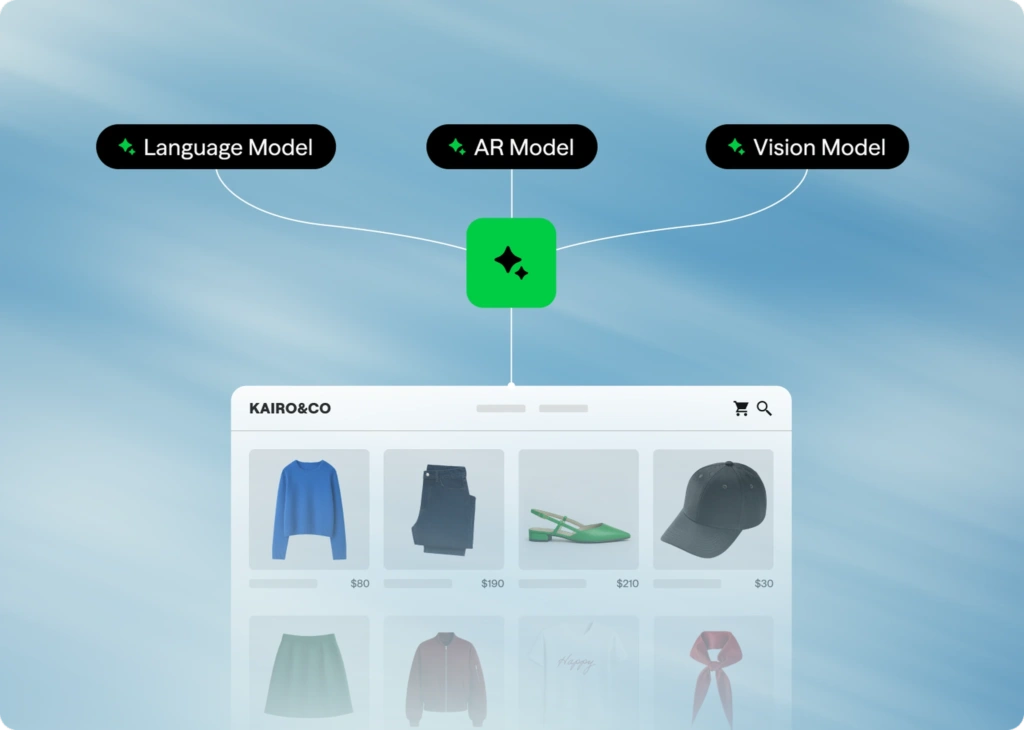
Modular, specialized models

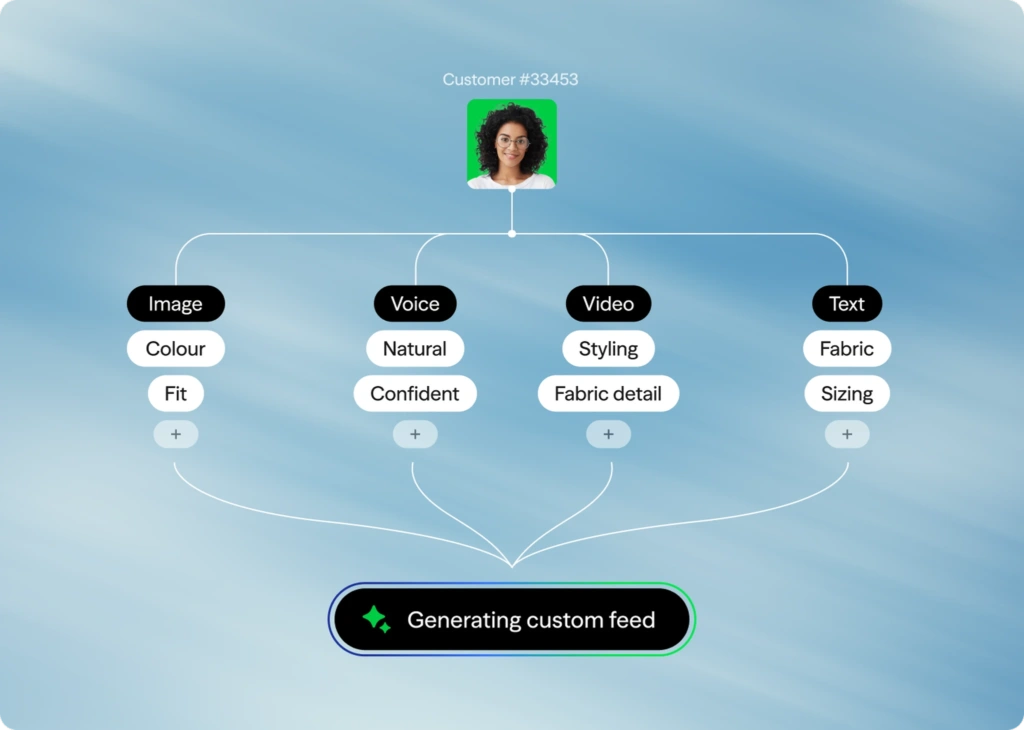
Multimodal personalization

Rapid experimentation

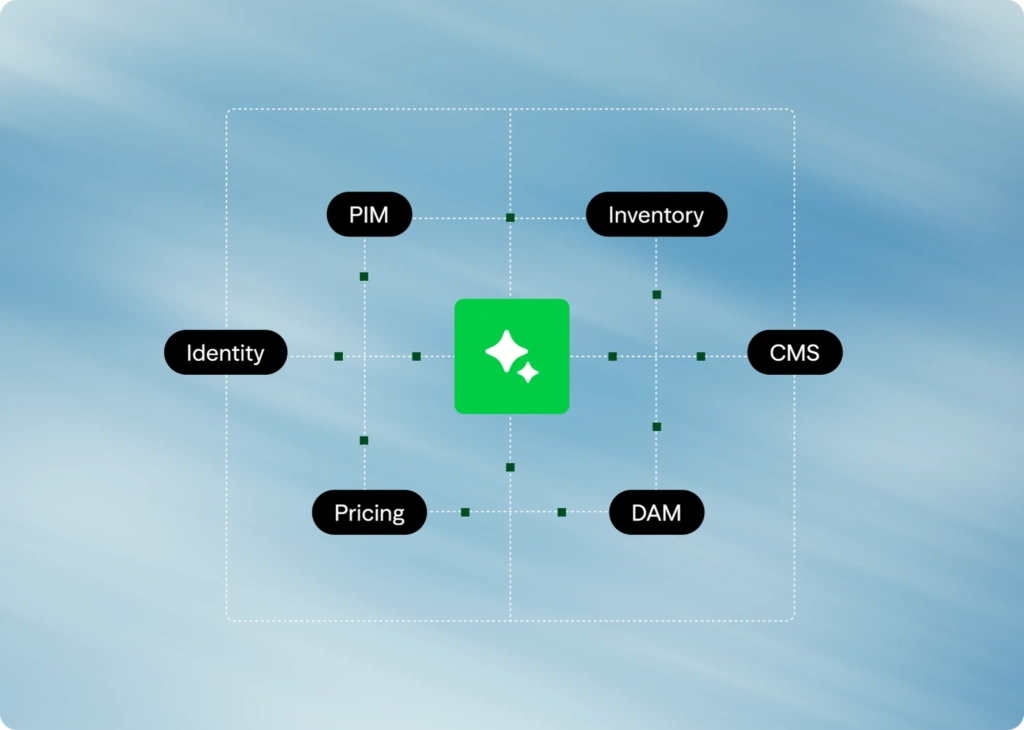
Integrated commerce stack

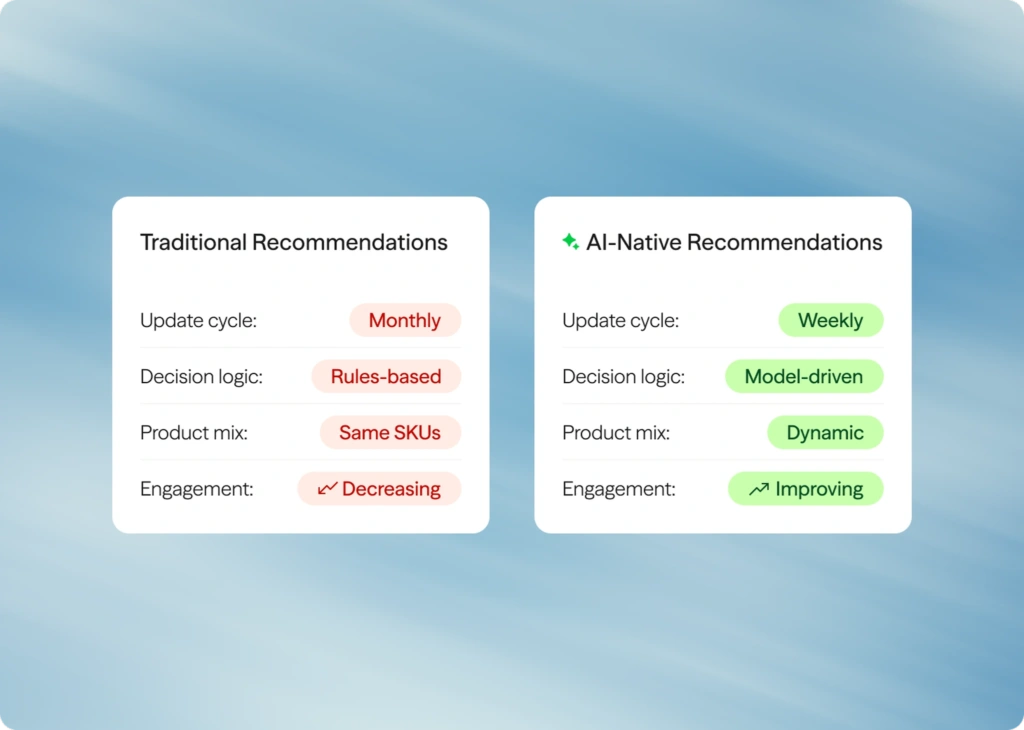
AI-native experiences

Data quality & governance

Technological foundation 

Our approach that makes it happen

Each of these components connects directly to business outcomes 
and each should operate flawlessly. To make it happen, we bring all the moving parts together by handling the models, data, pipelines and integrations. It delivers real business impact from day one and a scalable foundation for the future. Being more context-aware, each model in a multimodal system creates a chain of narrow “professionals” that can complete the task better than a generalized model. For commerce, this means better suggestions, fewer returns, better automation and ultimately – business wins.

Models that convert images, audio, and text into a unified vector space. This enables cross-modal similarity search, fusion and retrieval (such as image-to-text or voice-to-product metadata). Without shared embeddings, modalities remain siloed and cannot power a unified experience. 

Fusion layers combine encoded signals using attention or multimodal transformers. This allows the system to reason across modalities, such as aligning visual context with textual descriptions and voice intent.

Large pre-trained models that process multiple modalities. These can be adapted into commerce flows for interactive assistants, content generation and multimodal question answering. 

Vector stores like FAISS or Pinecone index embeddings for fast nearest-neighbor search. This enables instant retrieval across modalities, such as matching a camera image to the product catalog.

Multimodal commerce requires immediate responses. Optimized GPU/TPU inference, quantized models and service orchestration ensure low latency for applications like visual search and shoppable video.

Pipelines that clean and prepare inputs from voice, cameras, video and AR sensors. This includes speech-to-text, image normalization, frame extraction and SLAM for AR experiences.

Generative models create adaptive product content: lifestyle imagery, generated video, PDP copy and more. These are typically built from multimodal foundation models. 

Persistent memory layers track user interactions across sessions and modalities. This enables tailored recommendations, adaptive flows and consistent AI behavior.

Object detection and video tracking make media interactive. Integrations with commerce APIs connect visual moments directly to the product catalog and checkout flow.

For AR, mobile, and in-store experiences, some processing must run on the device to maintain speed and privacy. This requires edge-optimized models, lightweight SDKs and deployment pipelines.

Multimodal encoders/shared embedding spaces

Cross-modal fusion/attention mechanisms

Foundation multimodal models/LLMs with vision and audio

Vector databases and similarity search infrastructure

Real-time inference and low-latency serving

Multichannel input capture and pre-processing

Generative AI for content and product experience

Personalization and contextual memory systems

Shoppable media and embedded commerce APIs

Edge and on-device processing

Multimodal encoders/shared embedding spaces

Models that convert images, audio, and text into a unified vector space. This enables cross-modal similarity search, fusion and retrieval (such as image-to-text or voice-to-product metadata). Without shared embeddings, modalities remain siloed and cannot power a unified experience. 

Cross-modal fusion/attention mechanisms

Fusion layers combine encoded signals using attention or multimodal transformers. This allows the system to reason across modalities, such as aligning visual context with textual descriptions and voice intent.

Foundation multimodal models/LLMs with vision and audio

Large pre-trained models that process multiple modalities. These can be adapted into commerce flows for interactive assistants, content generation and multimodal question answering. 

Vector databases and similarity search infrastructure

Vector stores like FAISS or Pinecone index embeddings for fast nearest-neighbor search. This enables instant retrieval across modalities, such as matching a camera image to the product catalog.

Real-time inference and low-latency serving

Multimodal commerce requires immediate responses. Optimized GPU/TPU inference, quantized models and service orchestration ensure low latency for applications like visual search and shoppable video.

Multichannel input capture and pre-processing

Pipelines that clean and prepare inputs from voice, cameras, video and AR sensors. This includes speech-to-text, image normalization, frame extraction and SLAM for AR experiences.

Generative AI for content and product experience

Generative models create adaptive product content: lifestyle imagery, generated video, PDP copy and more. These are typically built from multimodal foundation models. 

Personalization and contextual memory systems

Persistent memory layers track user interactions across sessions and modalities. This enables tailored recommendations, adaptive flows and consistent AI behavior.

Shoppable media and embedded commerce APIs

Object detection and video tracking make media interactive. Integrations with commerce APIs connect visual moments directly to the product catalog and checkout flow.

Edge and on-device processing

For AR, mobile, and in-store experiences, some processing must run on the device to maintain speed and privacy. This requires edge-optimized models, lightweight SDKs and deployment pipelines.

News & insights

Research Solvd at NeurIPS 2025: Explainable AI (XAI) and Reinforcement Learning (RL) at scale
AI & data engineering
Multimodal commerce
White paper Multimodal commerce: new era of online shopping
AI & data engineering Digital experience Retail & consumer goods
Introducing Multimodal Commerce
Article Introducing multimodal commerce: The next era of customer experience
AI & data engineering Retail & consumer goods
Research GUIDE for incremental learning – Solvd at ECAI 2025
AI & data engineering
Research Classifier-free Guidance with Adaptive Scaling  – Solvd at ECAI 2025 
AI & data engineering
Research Studying the particle collisions – Solvd at ECAI 2025 
AI & data engineering
AI adoption framework
White paper Modern banking experience: A framework for AI adoption
AI & data engineering Banking, financial services & fintech
UCE
Article The business payoff of Unified Customer Experience (UCE) 
Digital experience
AI fraud
Article The $16B question: What to do about the rise of AI fraud
AI & data engineering

Ready to take your business to the next level?