Skip to content

Agentic commerce

The next step from thinking to acting

Why now

What makes agentic systems transformative

A missing layer between intelligence and execution

Continuous adaptation
and improvement

Empowering both retailers
and shoppers


The next era of commerce

How to win with agentic commerce

Reasoning & contextual understanding

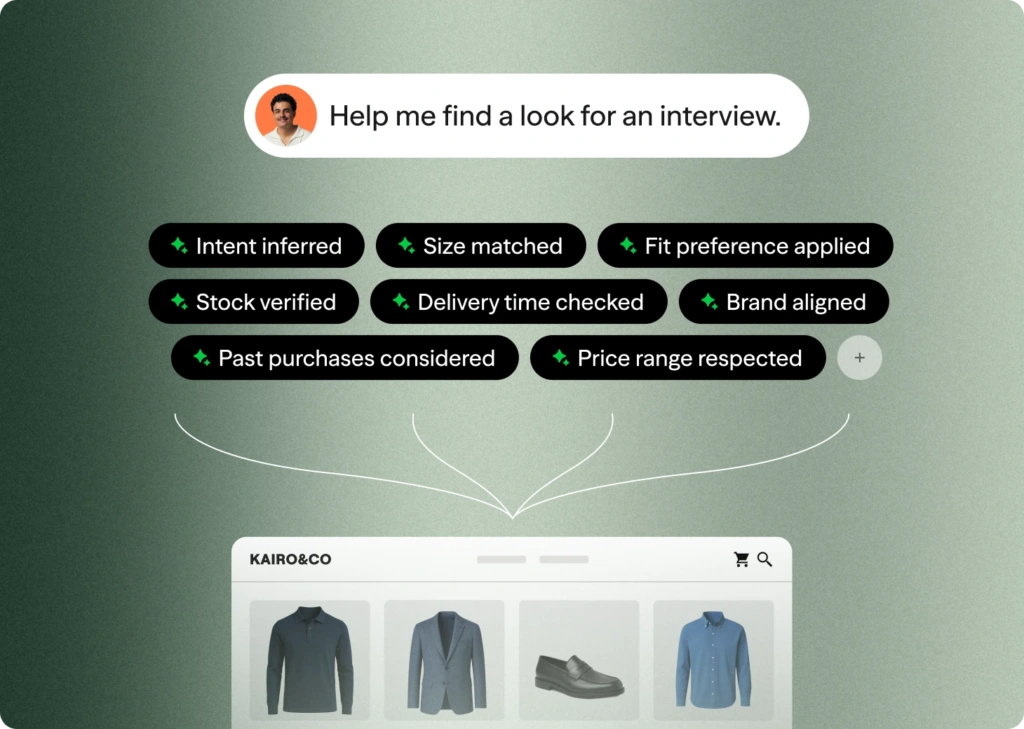
Goal-oriented customer assistance

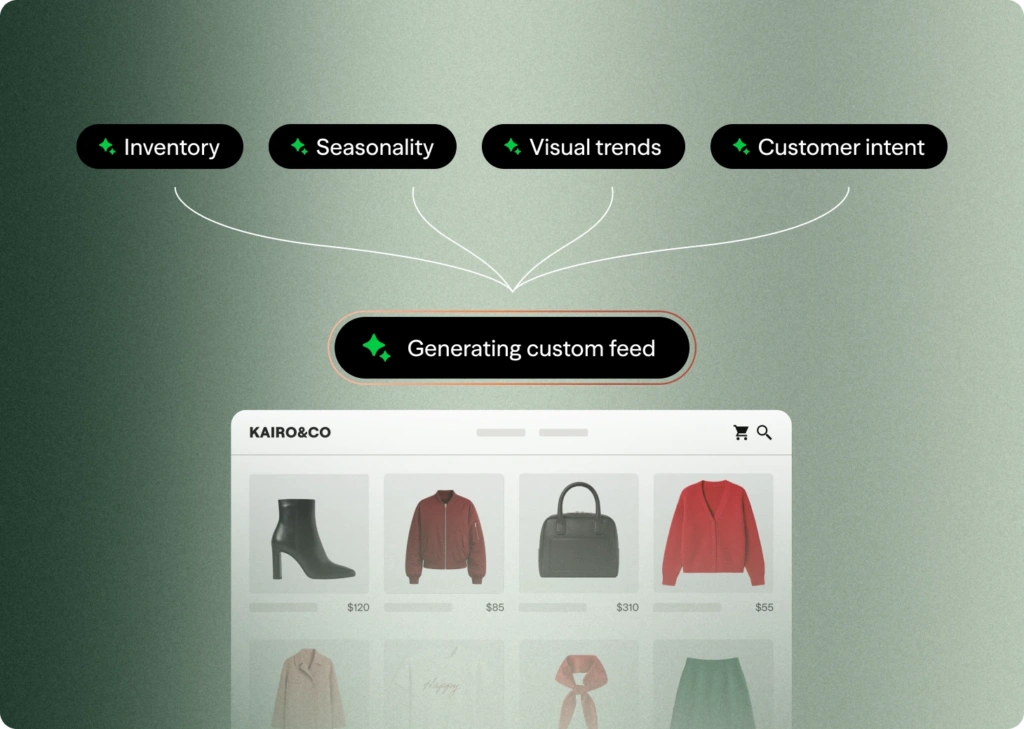
Adaptive merchandising & dynamic curation

Autonomous product & style advisor

Connected
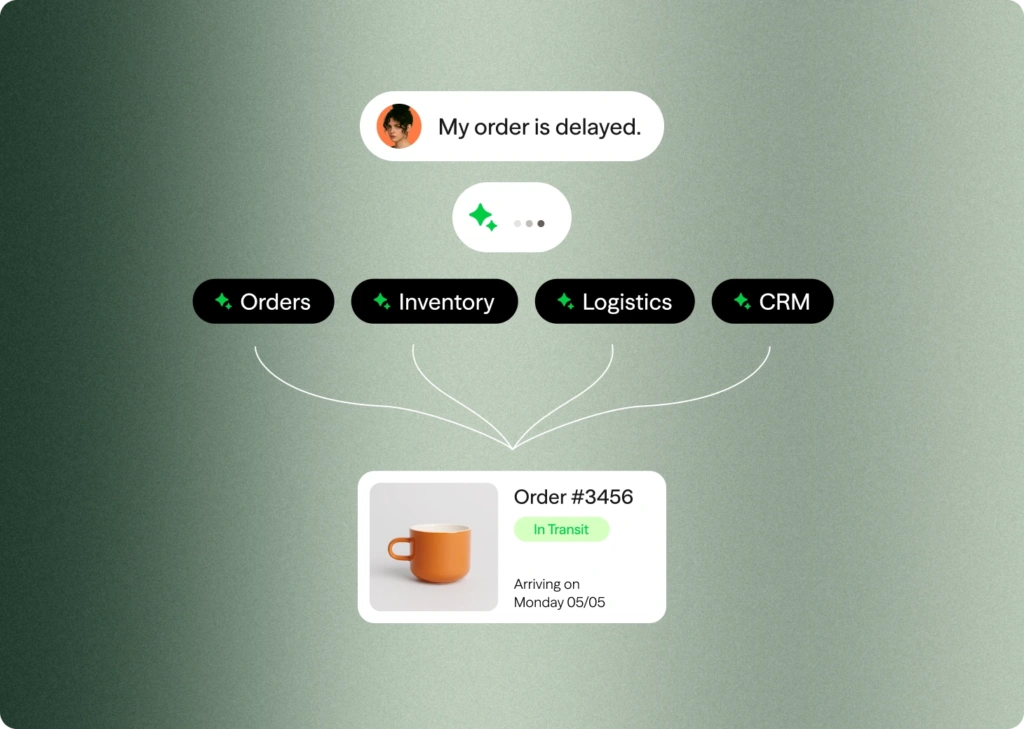
service agents

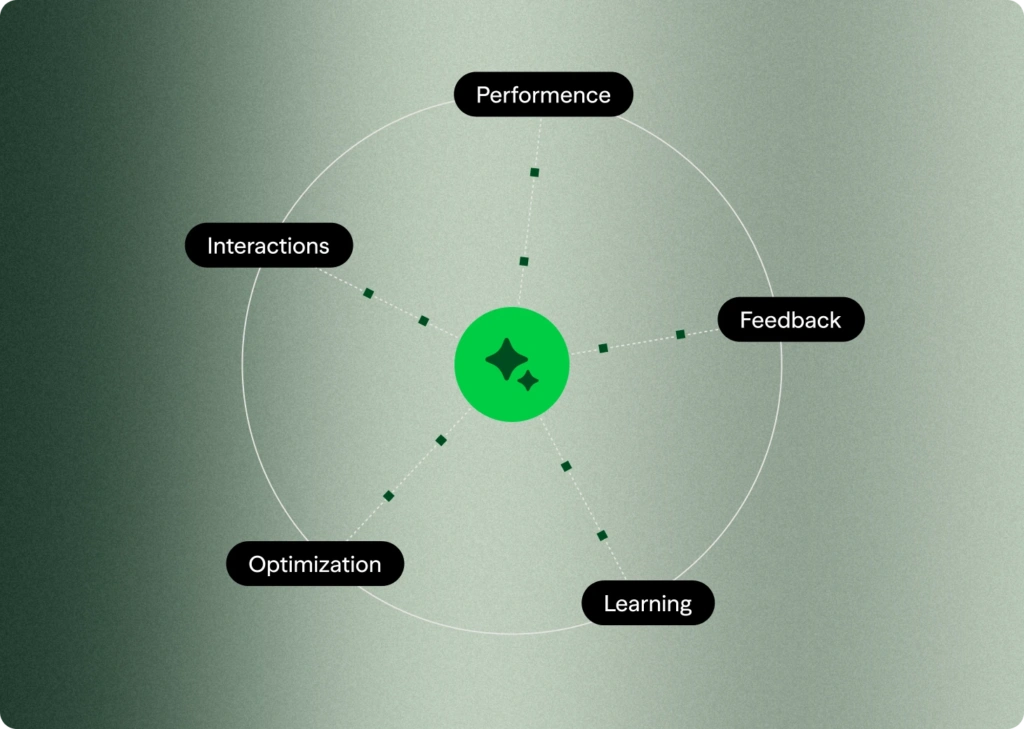
Continual learning & optimization

Technologies

Technologies that make it happen

Serve as the cognitive core of commerce agents, enabling multi-step reasoning, contextual understanding, and decision-making that mimic human judgment. They transform static interactions into dynamic, intent-driven dialogues that evolve in real time.

Power autonomous behavior by linking reasoning with action—allowing agents to plan, delegate and execute commerce workflows like personalized styling, order management and cross-channel coordination.

Ground reasoning in real-time business data such as inventory, product attributes and CRM insights, ensuring agents’ recommendations and actions are always relevant, verifiable and accurate.

Provide persistent context that allows agents to “remember” previous interactions, preferences and brand cues, building continuity across sessions and enabling more personal, anticipatory experiences.

Enable reasoning agents to act directly within enterprise systems—updating carts, checking stock, issuing returns—bridging intelligent intent with operational execution.

Feed voice, visual and behavioral signals into reasoning loops, giving agents a situational understanding of user intent and environment that supports truly adaptive interactions.

Allow agents to learn from every engagement, refining tone, accuracy and reasoning over time to deliver increasingly precise and emotionally aligned commerce experiences.

Create controlled environments for training reasoning behaviors, improving safety and reliability before deployment, ensuring agents can handle ambiguity, conflict and human nuance.

Define ethical, compliance and brand boundaries that anchor autonomous actions in trust and responsibility, ensuring every decision aligns with business principles and customer safety.

Support scalable, low-latency deployments of reasoning agents close to the customer from mobile to in-store, enabling instant responsiveness and privacy-preserving intelligence at the edge.

Reasoning-capable LLMs (e.g., GPT-4, Claude, Gemini Pro)

Agent frameworks (LangChain, AutoGen, ReAct, CrewAI)

Retrieval-augmented generation (RAG) Pipelines

Memory & context layers (Vector Databases + Knowledge Graphs)

Action orchestration & tool use APIs

Observation interfaces (Multimodal Sensors)

Reinforcement learning & feedback loops (RLHF, RLAIF)

Simulation & synthetic data generation

Governance & policy layers

Composable infrastructure (Microservices + Edge Reasoning)

Reasoning-capable LLMs (e.g., GPT-4, Claude, Gemini Pro)

Serve as the cognitive core of commerce agents, enabling multi-step reasoning, contextual understanding, and decision-making that mimic human judgment. They transform static interactions into dynamic, intent-driven dialogues that evolve in real time.

Agent frameworks (LangChain, AutoGen, ReAct, CrewAI)

Power autonomous behavior by linking reasoning with action—allowing agents to plan, delegate and execute commerce workflows like personalized styling, order management and cross-channel coordination.

Retrieval-augmented generation (RAG) Pipelines

Ground reasoning in real-time business data such as inventory, product attributes and CRM insights, ensuring agents’ recommendations and actions are always relevant, verifiable and accurate.

Memory & context layers (Vector Databases + Knowledge Graphs)

Provide persistent context that allows agents to “remember” previous interactions, preferences and brand cues, building continuity across sessions and enabling more personal, anticipatory experiences.

Action orchestration & tool use APIs

Enable reasoning agents to act directly within enterprise systems—updating carts, checking stock, issuing returns—bridging intelligent intent with operational execution.

Observation interfaces (Multimodal Sensors)

Feed voice, visual and behavioral signals into reasoning loops, giving agents a situational understanding of user intent and environment that supports truly adaptive interactions.

Reinforcement learning & feedback loops (RLHF, RLAIF)

Allow agents to learn from every engagement, refining tone, accuracy and reasoning over time to deliver increasingly precise and emotionally aligned commerce experiences.

Simulation & synthetic data generation

Create controlled environments for training reasoning behaviors, improving safety and reliability before deployment, ensuring agents can handle ambiguity, conflict and human nuance.

Governance & policy layers

Define ethical, compliance and brand boundaries that anchor autonomous actions in trust and responsibility, ensuring every decision aligns with business principles and customer safety.

Composable infrastructure (Microservices + Edge Reasoning)

Support scalable, low-latency deployments of reasoning agents close to the customer from mobile to in-store, enabling instant responsiveness and privacy-preserving intelligence at the edge.


Related content

Article
Mind the AI gap: Betting big with last mile engineering 04.30.2026
Read More
Research
Solvd CIO & CTO AI research 2026 03.31.2026
Read More
Article
The 10x engineer reframed: How agentic systems unlock authentic acceleration 03.17.2026
Read More
Research
NeurIPS 2025 Best Paper Award: Why 1000-layer networks unlock new capabilities 01.30.2026
Read More

Ready to take your business to the next level?